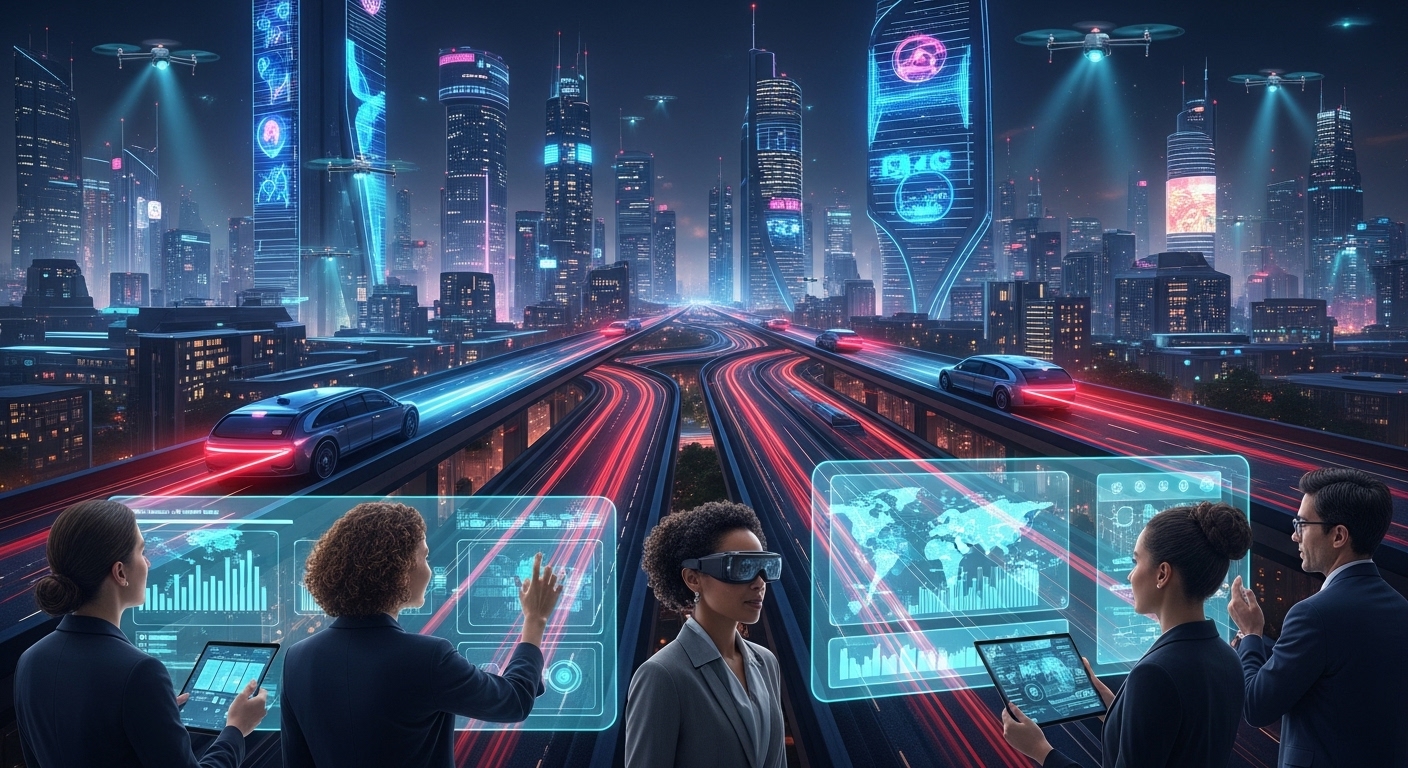
Technology has become the lifeblood of our modern society, influencing how we work, communicate, and live. From artificial intelligence to sustainable energy, innovations are reshaping every industry and aspect of daily life. The pace of technological advancement today is staggering, and understanding these trends is essential for individuals, businesses, and governments to remain competitive. This blog explores key technological developments, their impacts, and what the future might hold.
Artificial Intelligence: Transforming Everyday Life
Artificial Intelligence, or AI, is no longer a concept of science fiction. It has become an integral part of our lives, powering virtual assistants, recommendation engines, and autonomous systems. AI involves machines capable of learning, reasoning, and making decisions that were once exclusive to humans.
In healthcare, AI aids in diagnosing diseases, predicting patient outcomes, and analyzing medical data. In business, AI helps forecast market trends, improve customer service, and automate repetitive tasks. Even in education, AI-driven platforms provide personalized learning experiences for students. While AI brings enormous benefits, it also raises ethical concerns, including privacy, algorithmic bias, and the potential displacement of jobs.
Quantum Computing: Unlocking New Possibilities
Quantum computing is a revolutionary technology that promises to redefine what is possible in computing. Unlike traditional computers that use bits representing 0 or 1, quantum computers use qubits, which can exist in multiple states simultaneously. This allows quantum computers to perform complex calculations far faster than classical machines.
Quantum computing has potential applications in areas like drug discovery, climate modeling, cryptography, and optimization of complex systems. Although still in its early stages, the technology could solve problems previously considered unsolvable, paving the way for groundbreaking innovations across multiple sectors.
5G Networks: The Backbone of a Hyperconnected World
The rollout of 5G networks represents a significant leap in wireless communication technology. 5G offers incredibly high speeds, ultra-low latency, and the ability to connect millions of devices simultaneously. These features make it a crucial enabler for emerging technologies.
Autonomous vehicles, smart cities, and remote healthcare systems will all benefit from 5G’s capabilities. For example, self-driving cars rely on real-time data exchange to navigate safely, and surgeons could perform remote operations with unprecedented precision. 5G is not just about faster internet; it is about creating an interconnected ecosystem that can support innovations on a massive scale.
Blockchain: Beyond Cryptocurrency
Blockchain is often associated with cryptocurrencies like Bitcoin, but its potential extends far beyond digital money. At its core, blockchain is a decentralized ledger technology that ensures data transparency, security, and immutability.
Industries such as supply chain management, finance, healthcare, and government services are adopting blockchain to enhance transparency and reduce fraud. Smart contracts automate complex transactions without intermediaries, while secure digital identities help protect personal data. As blockchain continues to evolve, it is poised to become a fundamental infrastructure for trustworthy digital interactions.
Augmented Reality and Virtual Reality: Immersive Experiences
Augmented Reality (AR) and Virtual Reality (VR) are changing the way we interact with digital content. AR overlays digital elements onto the real world, enhancing our perception, while VR immerses users in completely virtual environments.
In education, AR can make complex subjects more understandable by visualizing concepts in three dimensions. Retailers use AR to allow customers to try on clothes or visualize products in their homes. In healthcare, VR provides realistic surgical simulations for training and therapy applications. These technologies are making experiences more interactive, engaging, and tailored to individual needs.
The Internet of Things: A Connected Ecosystem
The Internet of Things, or IoT, connects everyday devices to the internet, enabling them to collect, share, and act on data. Smart homes, wearable devices, industrial sensors, and connected vehicles are just a few examples of IoT in action.
IoT improves efficiency and convenience by automating processes and providing actionable insights. Smart thermostats adjust energy usage automatically, wearable devices monitor health metrics in real time, and industrial sensors predict equipment failures before they occur. While IoT creates a more connected world, it also raises concerns about cybersecurity and data privacy, highlighting the importance of robust security measures.
Sustainable Technology: Innovations for a Greener Planet
Sustainability has become a critical focus for technology. Renewable energy sources, electric vehicles, and energy-efficient infrastructure are examples of how technology can reduce environmental impact.
Solar and wind power are becoming increasingly cost-effective, supporting the global shift away from fossil fuels. Smart grids optimize electricity distribution and reduce waste, while electric vehicles reduce greenhouse gas emissions. Businesses are also adopting sustainable practices, such as energy-efficient data centers and eco-friendly manufacturing processes. Technology is proving that innovation and environmental responsibility can go hand in hand.
Cybersecurity: Protecting the Digital Frontier
As technology becomes more integrated into our lives, cybersecurity is more important than ever. From financial data to personal communications, digital assets are constantly under threat from hackers, malware, and cyberattacks.
Modern cybersecurity solutions rely on AI, machine learning, and encryption to detect and prevent threats in real time. Multi-factor authentication, secure networks, and regular system updates are essential practices for safeguarding information. As the digital landscape grows, cybersecurity will remain a critical component of technological adoption.
Ethics in Technology: Balancing Progress and Responsibility
The rapid pace of technological development brings ethical considerations to the forefront. AI bias, data privacy, automation, and surveillance are just a few areas where careful regulation and responsible development are needed.
Developers, organizations, and policymakers must prioritize transparency, fairness, and inclusivity. Creating ethical frameworks ensures that technology serves humanity without causing harm or inequality. Responsible innovation is not just an ideal; it is a necessity for sustainable technological growth.
The Future of Work: Technology in the Workplace
Technology is reshaping the workplace in profound ways. Automation and AI are changing how tasks are performed, requiring employees to adapt and develop new skills.
Routine work is increasingly automated, freeing human workers to focus on creativity, strategy, and problem-solving. Remote collaboration tools have made flexible work arrangements possible, while AI analytics provide insights that drive business growth. Preparing for the future of work involves embracing lifelong learning and integrating technology into skill development, rather than resisting change.
Conclusion: Embracing the Tech-Driven Future
The technological landscape is evolving faster than ever, creating opportunities and challenges in equal measure. From AI and quantum computing to 5G, blockchain, and sustainable innovations, emerging technologies are redefining the way we live and work.
While these advancements bring remarkable possibilities, they also require thoughtful consideration of ethics, privacy, and security. By understanding, embracing, and responsibly applying technology, individuals, businesses, and societies can harness its power to build a more connected, efficient, and sustainable future. The journey of innovation is ongoing, and how we navigate it today will shape the world of tomorrow.