In today’s world, technology isn’t just a tool for convenience or business; it has become the driving force behind almost every aspect of modern life. From how we communicate and work, to how we learn, shop, and entertain ourselves, technology continues to revolutionize the fabric of society. The pace of technological change has accelerated dramatically in the 21st century, bringing us closer to breakthroughs that were once confined to science fiction. As we stand at the precipice of new and emerging technologies, we are witnessing a true technological renaissance—a period of profound innovation, where new concepts, tools, and systems are shaping our future in ways we never imagined.
In this blog post, we will explore the most exciting and transformative technological advancements that are set to reshape our world, as well as the implications these innovations will have on our lives, industries, and societies. From artificial intelligence and quantum computing to biotechnology and the Internet of Things, the future promises to be a place where the boundaries of possibility are continually pushed.
The Age of Artificial Intelligence: From Imagination to Reality
Artificial Intelligence (AI) has moved from a theoretical concept to a practical and ubiquitous force in society. What was once confined to the realm of science fiction is now deeply embedded in our daily lives. Whether it’s through the use of virtual assistants like Siri and Alexa, AI-powered recommendation engines on platforms like Netflix and Amazon, or autonomous vehicles, AI is rapidly becoming an integral part of modern life.
One of the most exciting applications of AI is in healthcare. Machine learning algorithms can analyze vast datasets of medical information to detect patterns that might be invisible to human doctors. This ability allows for faster, more accurate diagnoses of diseases like cancer, heart disease, and diabetes. AI is also making strides in drug discovery, where AI systems can analyze chemical compounds and predict their potential effectiveness, accelerating the process of developing life-saving treatments.
AI has also significantly impacted industries like finance, retail, and entertainment. In finance, AI-powered algorithms are used for fraud detection, risk management, and automated trading. Retailers leverage AI for personalized shopping experiences, predictive analytics, and efficient supply chain management. In entertainment, AI is used for content creation, from generating music and art to enhancing the gaming experience with smarter non-player characters (NPCs).
However, the rise of AI also brings with it challenges. Ethical concerns about privacy, bias in AI algorithms, and the potential for job displacement are important topics that need to be addressed as AI continues to evolve. The development of AI must be balanced with responsible practices that ensure fairness, transparency, and accountability in its applications.
Quantum Computing: The Frontier of Computation
Quantum computing is another technological advancement that has the potential to transform the world as we know it. Unlike classical computers, which process information in binary bits (0s and 1s), quantum computers use quantum bits or qubits, which can exist in multiple states simultaneously. This unique property allows quantum computers to solve problems that are impossible for classical computers to handle within a reasonable timeframe.
In fields like cryptography, quantum computing has the potential to revolutionize security by enabling unbreakable encryption techniques. Quantum algorithms can crack traditional encryption methods that rely on the difficulty of factoring large numbers, such as RSA encryption, which secures much of today’s internet traffic. While this presents challenges for current security systems, it also opens the door to quantum-resistant encryption techniques that will redefine digital privacy.
Quantum computing could also have a profound impact on industries like pharmaceuticals, materials science, and artificial intelligence. For example, quantum computers could simulate molecular structures and chemical reactions in ways that traditional computers cannot, potentially leading to breakthroughs in drug discovery, energy storage, and new materials development.
Despite its promise, quantum computing is still in its infancy, with only a handful of companies and research institutions making significant strides toward building a commercially viable quantum computer. However, as researchers continue to overcome technical challenges such as qubit stability and error correction, the future of quantum computing looks bright, and its potential applications could reshape industries in ways we are only beginning to understand.
Biotechnology: Merging Biology with Technology
Biotechnology is another area where technology is having a profound impact on human life. From gene editing to personalized medicine, biotechnology has the potential to solve some of the most pressing challenges in healthcare and agriculture. One of the most groundbreaking innovations in biotechnology is CRISPR-Cas9, a revolutionary gene-editing tool that allows scientists to alter DNA with incredible precision.
The potential applications of CRISPR are vast. In healthcare, it could lead to the eradication of genetic disorders, such as cystic fibrosis, sickle cell anemia, and muscular dystrophy. CRISPR could also be used to modify genes to increase resistance to diseases, potentially enabling the creation of disease-resistant crops or even genetically modified humans with enhanced resistance to illnesses like cancer or HIV.
In agriculture, biotechnology is being used to create genetically modified crops that are more resistant to pests, diseases, and changing climate conditions. Crops like genetically engineered soybeans, corn, and rice have been developed to withstand droughts, reducing the need for pesticides and increasing food security in regions vulnerable to climate change.
However, with these advancements come significant ethical concerns. The ability to manipulate the genetic code of humans, animals, and plants raises questions about the long-term impact on biodiversity, the environment, and the ethical implications of “designer” organisms. As biotechnology continues to evolve, it will be important to balance innovation with caution and responsible practices to ensure these technologies are used for the benefit of all.
The Internet of Things (IoT): Connecting the World
The Internet of Things (IoT) refers to the network of interconnected devices that communicate with each other through the internet. These devices, which include everything from smartphones and home appliances to vehicles and industrial machinery, collect and share data to improve efficiency, convenience, and performance. IoT is already transforming industries such as healthcare, transportation, manufacturing, and agriculture.
In healthcare, IoT-enabled devices are revolutionizing patient monitoring. Wearables like fitness trackers, smartwatches, and medical devices like glucose monitors allow individuals and healthcare providers to track vital signs in real-time. This enables doctors to monitor patients remotely, detect early signs of health problems, and provide timely interventions.
In smart homes, IoT devices are making life more convenient and energy-efficient. Smart thermostats, lights, and appliances can be controlled remotely via smartphones, adjusting settings based on user preferences and schedules. IoT also plays a role in improving security through smart cameras, door locks, and motion sensors that can be monitored from anywhere in the world.
In industries such as manufacturing, IoT is enabling the development of smart factories. Machines and equipment are embedded with sensors that collect real-time data, which is then analyzed to optimize production, predict maintenance needs, and reduce downtime. This leads to increased efficiency, reduced operational costs, and better decision-making.
While the benefits of IoT are clear, there are challenges related to privacy and security. With millions of devices collecting and transmitting personal data, the risk of cyberattacks and data breaches increases. As IoT continues to expand, ensuring robust security measures and protecting user privacy will be critical.
The Future of Tech: Autonomous Systems and Beyond
Looking forward, we are entering an era where technology will become increasingly autonomous. From self-driving cars to automated factories, autonomous systems are poised to revolutionize transportation, manufacturing, logistics, and other sectors. The promise of autonomous systems lies in their ability to reduce human error, improve efficiency, and create safer working environments.
In transportation, self-driving vehicles are expected to reduce accidents caused by human error, ease traffic congestion, and lower emissions by optimizing driving patterns. Autonomous trucks could transform the logistics industry by reducing the cost of shipping goods, increasing delivery speed, and improving safety on the roads.
In manufacturing, robots and AI-driven systems are already being used for tasks such as assembly, quality control, and packaging. Autonomous robots can work around the clock, improving productivity and reducing the need for human labor in dangerous or repetitive tasks. In the long term, we may see entire factories run by autonomous systems, with human workers overseeing the operations.
While the potential for autonomous systems is vast, there are concerns about job displacement, regulation, and safety. The rise of automation may lead to significant shifts in the labor market, as certain jobs become obsolete while others evolve. As autonomous systems continue to develop, it will be important for governments, businesses, and workers to adapt to this changing landscape through reskilling programs, regulatory frameworks, and social policies.
The Intersection of Technologies: How Innovation Is Driving Synergy
One of the most exciting aspects of modern technology is how different innovations are intersecting and complementing each other. AI is being integrated with IoT to create smart devices that can learn and adapt to user behavior. Quantum computing could enhance AI’s capabilities, enabling even faster and more accurate data processing. Biotechnology and AI are converging in fields like personalized medicine and gene editing. These intersections of technology are leading to new forms of innovation that were once unimaginable.
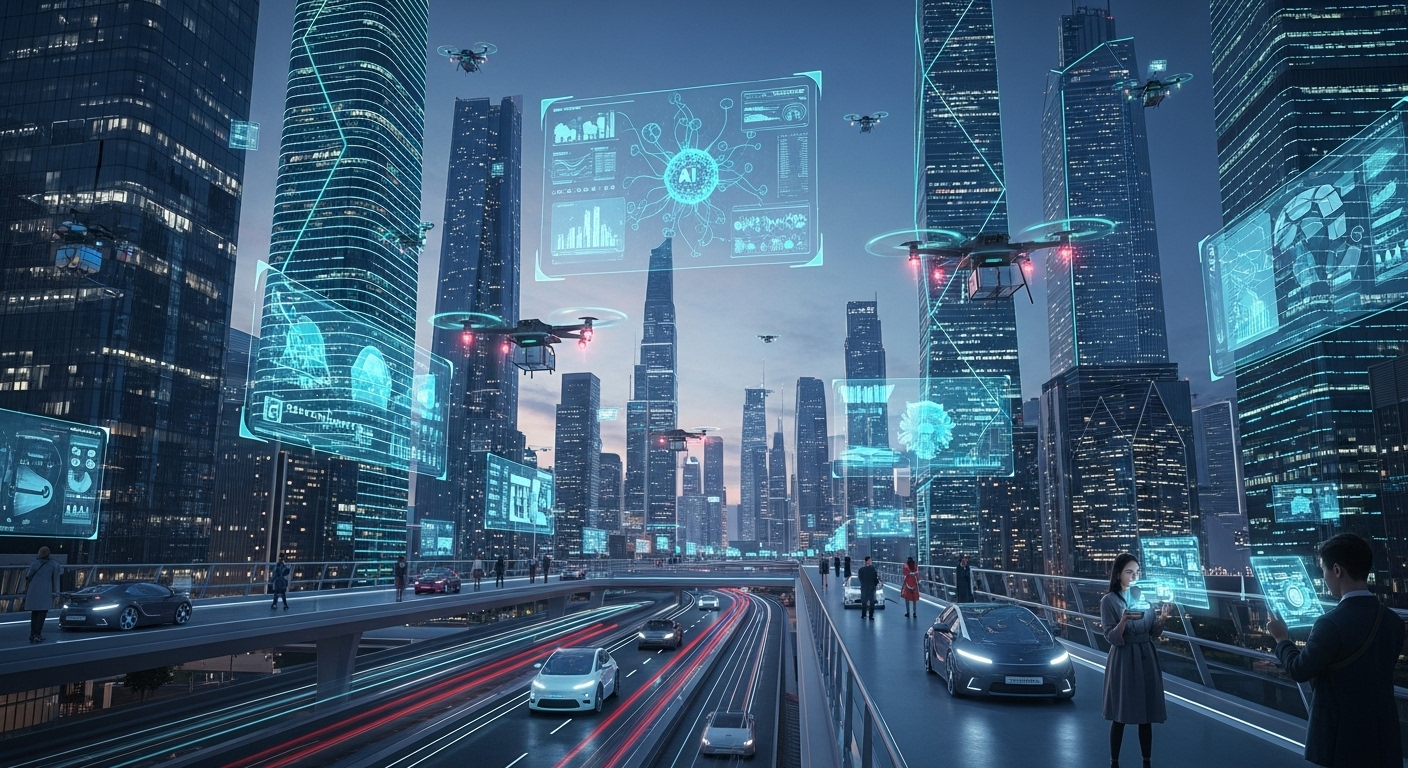
As these technologies converge, we are likely to see the emergence of entirely new industries and business models. The integration of AI, IoT, and biotechnology could lead to breakthroughs in areas like smart cities, where data from interconnected devices is used to optimize everything from traffic flow to energy consumption. Similarly, the combination of quantum computing and AI could accelerate the development of new drugs, materials, and technologies that will drive the next wave of innovation.
Conclusion: A World Transformed by Technology
The technological renaissance we are currently experiencing is transforming the world in ways that were once beyond imagination. From AI and quantum computing to biotechnology and the IoT, these innovations are not only shaping industries but are also redefining what it means to be human. While these advancements hold immense potential for improving our lives, they also present new challenges, particularly around issues like privacy, ethics, and the future of work.