Introduction: A Glimpse Into the Digital Future
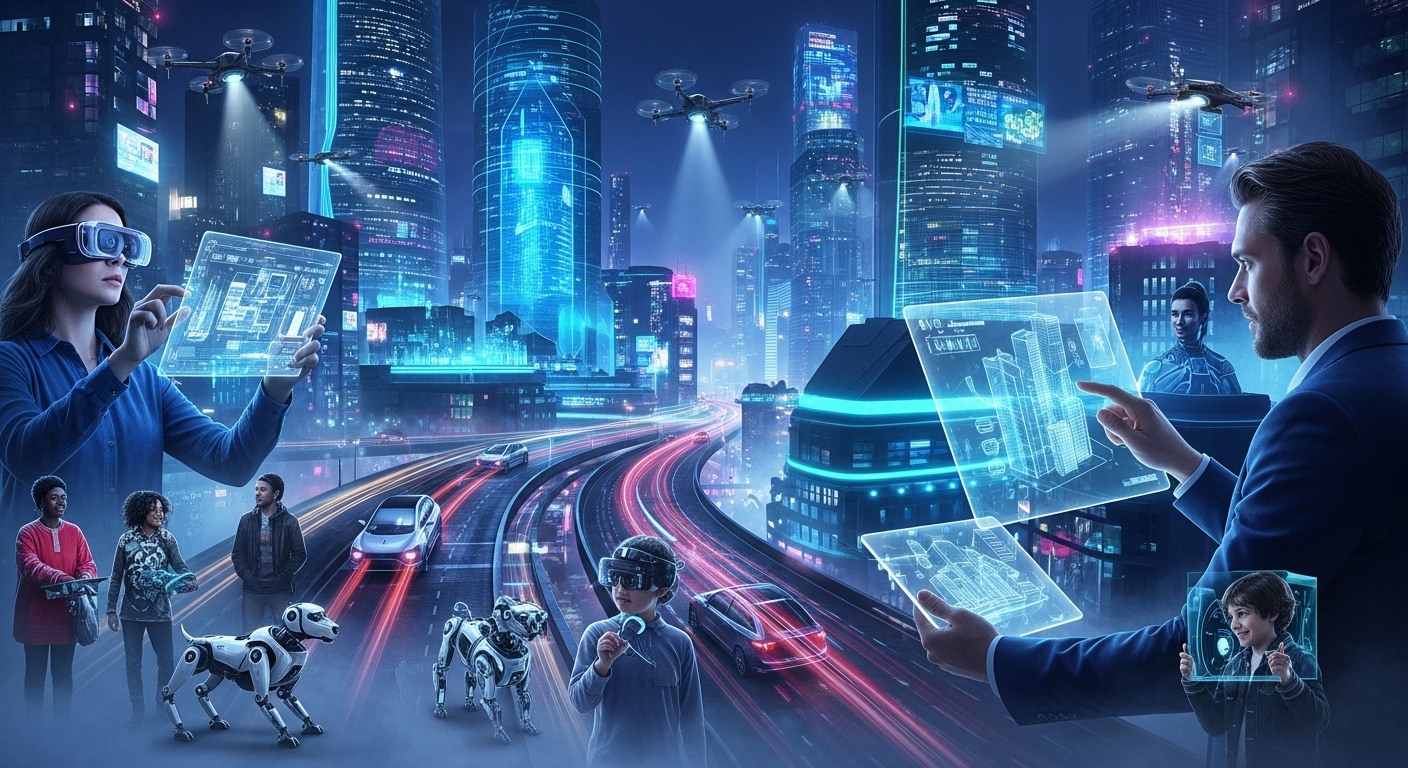
The world of technology is evolving faster than anyone could have predicted. What was once considered science fiction is now rapidly becoming science fact. From self-driving cars to AI-powered personal assistants, and from cloud computing to virtual reality experiences, the digital age is reshaping every aspect of how we live, work, and interact. The rapid pace of technological advancements is not just a trend but a fundamental shift in the way society functions. As we move towards 2025, it is critical to examine what the future of technology holds and how it will continue to influence industries, cultures, and our everyday lives.
In this blog post, we explore the transformative technologies that are on the horizon and how they will impact our world. These innovations, many of which are already taking shape, promise to redefine the boundaries of possibility and create new opportunities for growth, creativity, and connectivity.
Artificial Intelligence: The Brain Behind the Digital Revolution
Artificial intelligence (AI) is without a doubt one of the most transformative forces in the tech industry today. From natural language processing to predictive analytics, AI has the potential to revolutionize nearly every sector. By 2025, AI will have further integrated into our daily lives, powering smarter cities, automating tasks, and creating more personalized experiences.
In healthcare, AI is already being used to diagnose diseases, analyze medical images, and predict patient outcomes. Machine learning algorithms can analyze vast amounts of data to identify patterns that would be impossible for humans to detect, enabling more accurate diagnoses and more effective treatment plans. By 2025, it is likely that AI will play an even larger role in drug development, personalized medicine, and remote healthcare.
AI’s influence in the workplace is also set to increase. Automation powered by AI is already reshaping industries like manufacturing, logistics, and customer service. By 2025, AI could take over many routine and manual tasks, allowing humans to focus on more creative and strategic work. However, this shift will also raise important questions about the future of jobs, requiring society to find ways to balance the benefits of automation with the need for employment opportunities.
Beyond the workplace and healthcare, AI will also play a significant role in entertainment and communication. From AI-generated music and art to virtual assistants that can organize your day and help with decision-making, the possibilities are vast. As AI continues to evolve, its impact on human creativity and interaction will be profound.
Quantum Computing: The Next Frontier in Processing Power
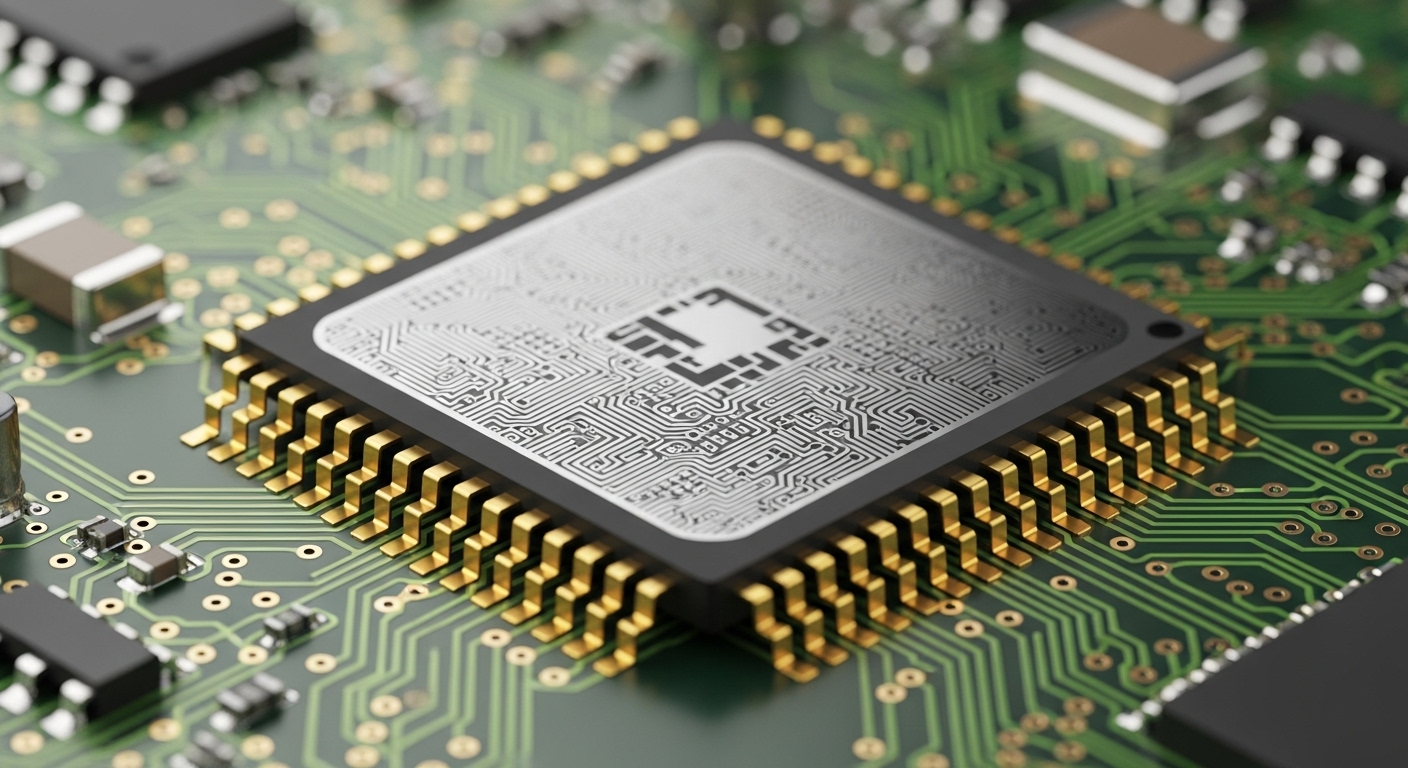
Quantum computing, though still in its early stages, promises to be one of the most groundbreaking technologies of the coming decade. Unlike classical computers, which use binary bits (0 or 1) to represent information, quantum computers use qubits, which can exist in multiple states simultaneously. This phenomenon, known as superposition, allows quantum computers to solve problems at exponentially faster rates than traditional computers.
By 2025, quantum computing is expected to make significant strides, especially in fields like cryptography, drug discovery, and materials science. In cryptography, quantum computers could potentially break current encryption algorithms, which rely on the difficulty of factoring large numbers. This has led to the development of quantum-resistant encryption methods to ensure the security of digital transactions and communications.
In drug discovery, quantum computing could simulate the interactions of molecules at an unprecedented scale, enabling faster and more efficient development of new drugs and therapies. The technology could also be used to discover new materials with unique properties, leading to breakthroughs in energy storage, electronics, and manufacturing.
However, quantum computing also faces significant challenges, such as the difficulty of maintaining the fragile state of qubits and the need for extremely low temperatures to operate. As of now, quantum computers are still in the prototype phase, but experts predict that by 2025, we could see the first practical applications of this technology in real-world scenarios.
The Rise of the Internet of Things (IoT): Connecting the Physical and Digital Worlds
The Internet of Things (IoT) is already making waves in various industries, from smart homes to healthcare and manufacturing. IoT refers to the network of interconnected devices that communicate with each other and share data over the internet. These devices can range from everyday household items, such as thermostats and refrigerators, to industrial machines and healthcare equipment.
By 2025, the IoT ecosystem is expected to expand even further, with billions of devices connected to the internet. This explosion of interconnected devices will create a wealth of data, which can be harnessed for everything from optimizing energy consumption to improving supply chain logistics. In smart homes, IoT devices will provide more seamless automation, such as adjusting your thermostat based on your location or monitoring your health metrics in real-time.
In industries like healthcare, IoT devices are already helping to monitor patients remotely, allowing for more personalized care and early detection of health issues. Wearables, such as smartwatches, will play an increasingly important role in health management, enabling individuals to track vital signs like heart rate, blood pressure, and sleep patterns.
While the potential of IoT is immense, it also raises concerns around data security and privacy. With so many devices collecting and transmitting data, ensuring that this information is secure and used responsibly will be critical in the coming years. By 2025, governments and businesses will need to implement robust regulations and security protocols to protect the growing IoT ecosystem from cyber threats.
5G Connectivity: A New Era of Speed and Efficiency
The rollout of 5G networks is already underway, and by 2025, this next-generation wireless technology will have a significant impact on everything from mobile communications to autonomous vehicles. 5G promises to provide faster speeds, lower latency, and greater connectivity than ever before, unlocking new possibilities in industries ranging from entertainment to transportation.
For consumers, 5G will mean faster download speeds, improved streaming quality, and more reliable connectivity in crowded areas. With 5G, users will be able to download large files, stream 4K video, and play high-quality online games with virtually no lag. Additionally, the increased bandwidth of 5G will make it easier to connect more devices to the internet simultaneously, paving the way for the continued expansion of IoT.
For businesses, 5G will enable new applications and services, particularly in industries like healthcare, logistics, and entertainment. In healthcare, 5G’s low latency will enable real-time remote surgeries and telemedicine services, providing access to specialized care in underserved areas. In logistics, 5G will improve the efficiency of supply chains by enabling real-time tracking of goods and automating warehouses.
One of the most exciting possibilities of 5G is its potential to enable autonomous vehicles. With low-latency communication, self-driving cars will be able to share real-time data with each other and with infrastructure, improving safety and efficiency on the roads. By 2025, autonomous vehicles could become a common sight in cities around the world, transforming the way we commute and transport goods.
Virtual Reality and Augmented Reality: Blurring the Lines Between the Real and the Digital
Virtual Reality (VR) and Augmented Reality (AR) are technologies that have gained significant attention in recent years, and by 2025, their influence is set to grow even further. VR immerses users in a fully digital environment, while AR overlays digital elements onto the real world. These technologies are transforming industries such as gaming, education, healthcare, and retail.
In gaming, VR has already begun to offer immersive experiences that allow players to interact with virtual worlds in a way that traditional gaming consoles cannot. By 2025, VR gaming could become even more realistic, with more advanced hardware and software that provide a truly lifelike experience. Similarly, AR has applications in gaming, allowing players to interact with the real world while incorporating virtual elements.
Beyond entertainment, VR and AR are poised to revolutionize education and training. Virtual reality can simulate complex environments, allowing students to explore historical sites, conduct scientific experiments, or practice surgeries without leaving the classroom. Augmented reality, on the other hand, can enhance learning experiences by providing interactive content that overlays digital information onto physical objects.
In retail, AR will allow customers to try on clothes virtually or visualize furniture in their homes before making a purchase. These technologies will make shopping more personalized and convenient, providing new ways for consumers to interact with products.
Blockchain Technology: Decentralizing the Digital World
Blockchain is perhaps best known as the technology behind cryptocurrencies like Bitcoin, but its potential extends far beyond digital currencies. Blockchain is essentially a decentralized, distributed ledger that records transactions across multiple computers in a way that ensures transparency, security, and immutability. This technology has the potential to disrupt industries ranging from finance to supply chain management.
In the coming years, blockchain could transform how we handle data, conduct business, and even vote. In finance, blockchain technology is already enabling faster and more secure transactions, cutting down the need for intermediaries like banks. It also allows for more transparency, as all transactions are recorded on the blockchain and are accessible to all participants.
Beyond finance, blockchain could revolutionize supply chain management by providing a transparent and immutable record of goods as they move from producer to consumer. In healthcare, blockchain could be used to create secure and portable patient records, allowing individuals to control access to their medical data.
By 2025, blockchain will likely become a mainstream technology, enabling more secure, transparent, and efficient systems across a wide range of industries.
Conclusion: Embracing the Future of Technology
The technologies of 2025 will likely transform our world in ways we can only begin to imagine. From AI and quantum computing to 5G and blockchain, the innovations on the horizon will redefine industries, empower individuals, and create new opportunities for growth and collaboration. However, these advancements will also raise important challenges, such as data privacy, ethical concerns, and the impact on jobs.