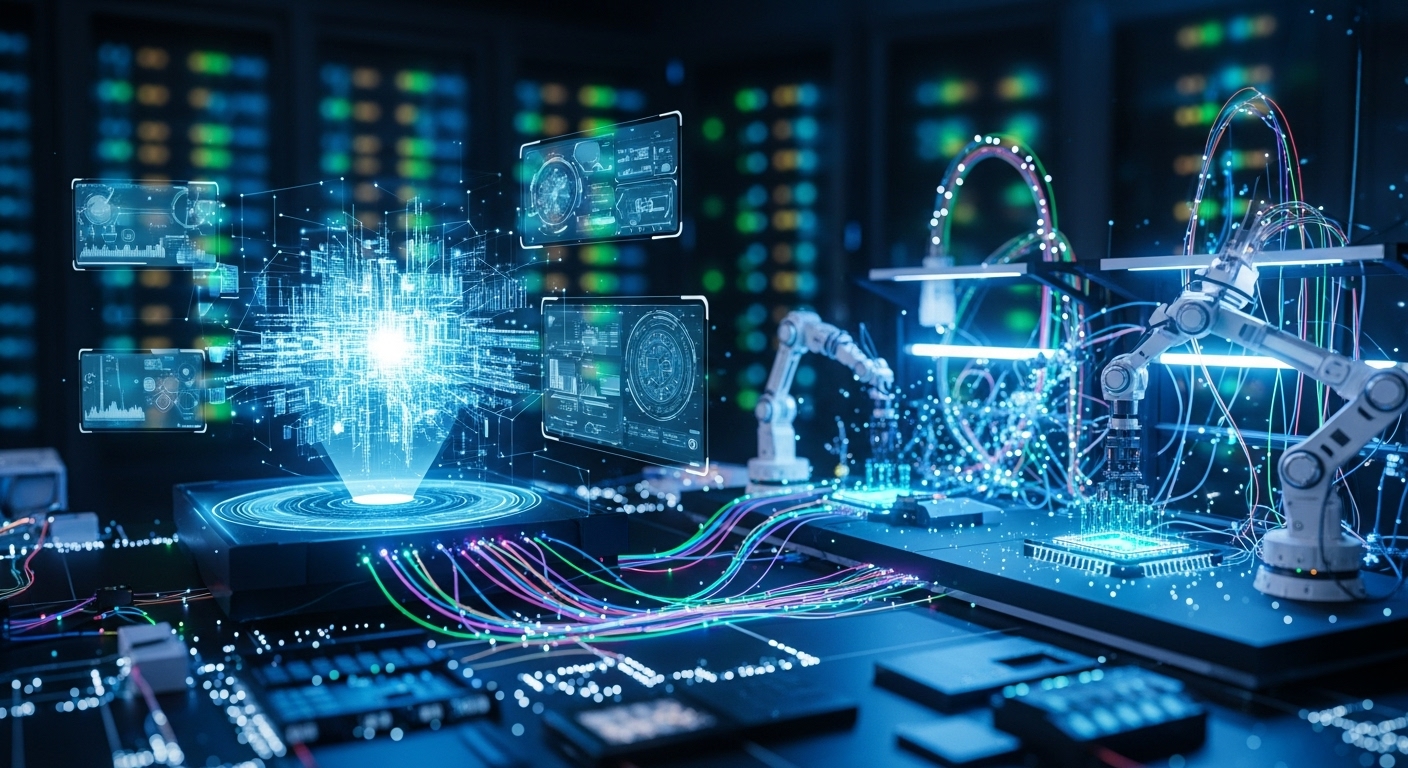

Introduction: Technology as the Catalyst of Modern Civilization
Technology has always been the driving force behind human progress. From the invention of the wheel to the development of the internet, each technological breakthrough has fundamentally altered how societies function and how individuals live. Today, we stand at the precipice of a new digital renaissance—an era defined by rapid advancements in artificial intelligence, quantum computing, biotechnology, and more. These emerging technologies promise to revolutionize industries, economies, and our everyday lives. This blog explores the most transformative technological trends shaping the future, their potential benefits, challenges, and the profound implications they carry.
The Evolution of Technology: A Brief Overview
To appreciate the magnitude of the current technological wave, it is essential to look back at the evolution of technology. Early human inventions such as fire, tools, and agriculture laid the foundation for civilization. The Industrial Revolution marked a major turning point, introducing mechanization, mass production, and transportation networks. The 20th century accelerated this pace with the rise of computers, the internet, and mobile communications.
The digital revolution has since interconnected the globe and democratized access to information. Today’s technologies build upon this digital foundation, pushing boundaries further with intelligent systems, ubiquitous connectivity, and new computational paradigms.
Artificial Intelligence: The Mind Behind Machines
Artificial intelligence, or AI, has emerged as one of the most transformative technologies of our time. At its core, AI refers to machines capable of performing tasks that typically require human intelligence—such as recognizing speech, understanding natural language, solving problems, and learning from data.
The application of AI spans numerous sectors. In healthcare, AI algorithms assist in diagnosing diseases, personalizing treatment plans, and accelerating drug discovery. In finance, AI powers fraud detection and algorithmic trading. Autonomous vehicles rely on AI to navigate complex environments safely.
AI also raises important ethical questions. Issues like algorithmic bias, privacy, job displacement, and decision accountability require careful consideration. As AI systems become more integrated into society, ensuring transparency, fairness, and regulation will be crucial to maximizing their benefits while mitigating risks.
Quantum Computing: Unlocking Unimaginable Processing Power
Quantum computing represents a radical departure from classical computing. Unlike traditional bits that store data as zeros or ones, quantum bits, or qubits, can exist in multiple states simultaneously due to the principles of superposition and entanglement. This allows quantum computers to solve certain complex problems exponentially faster than classical machines.
While still in its nascent stages, quantum computing holds immense potential. It could revolutionize cryptography by breaking current encryption methods or creating unbreakable codes. In material science and chemistry, quantum simulations could lead to new materials and medicines by modeling molecular interactions with unprecedented accuracy.
Building stable, scalable quantum computers is a monumental engineering challenge. However, governments and private companies are heavily investing in this technology, anticipating its eventual impact across fields ranging from logistics optimization to artificial intelligence enhancement.
The Internet of Things: Connecting the Physical and Digital Worlds
The Internet of Things, commonly abbreviated as IoT, refers to the network of physical devices embedded with sensors, software, and connectivity, enabling them to collect and exchange data. From smart homes to industrial machinery, IoT devices are creating an interconnected ecosystem where digital intelligence controls physical environments.
Smart cities leverage IoT to optimize traffic flow, monitor air quality, and manage energy consumption, improving urban living conditions. In agriculture, IoT sensors help monitor soil moisture and crop health, leading to more efficient resource use. Wearable devices track health metrics in real-time, empowering individuals to take charge of their wellness.
However, the proliferation of IoT devices raises concerns regarding data security and privacy. Ensuring robust protection against cyberattacks and unauthorized access is paramount as these devices increasingly influence critical infrastructure and personal lives.
Biotechnology and Genetic Engineering: Redefining Life Itself
Advances in biotechnology and genetic engineering are poised to redefine medicine, agriculture, and even human capabilities. Techniques such as CRISPR gene editing allow scientists to precisely modify DNA, offering the potential to cure genetic diseases, enhance crop resilience, and even bring extinct species back to life.
Personalized medicine, which tailors treatments based on an individual’s genetic makeup, is becoming increasingly viable. This approach promises higher efficacy and fewer side effects compared to traditional “one-size-fits-all” therapies.
Ethical considerations are at the forefront of biotechnology discussions. The power to alter life raises questions about safety, consent, inequality, and the very definition of what it means to be human. As this field evolves, global dialogue and regulation will be essential to navigate these complex issues responsibly.
Renewable Energy Technologies: Powering a Sustainable Future
The global shift towards renewable energy technologies is critical in addressing climate change and reducing dependence on fossil fuels. Solar power, wind energy, hydroelectricity, and emerging sources like tidal and geothermal energy are transforming how we generate electricity.
Innovations in energy storage, particularly advanced battery technologies, are enhancing the reliability and scalability of renewables. Smart grids, powered by IoT and AI, optimize energy distribution and consumption, making energy systems more efficient and resilient.
Beyond electricity, renewable technologies are influencing transportation with electric vehicles and sustainable fuels gaining traction. The integration of these technologies is essential for building a sustainable future that balances economic growth with environmental stewardship.
5G and Beyond: The Next Generation of Connectivity
The rollout of 5G networks marks a new chapter in telecommunications, offering significantly faster speeds, lower latency, and the capacity to connect billions of devices simultaneously. This upgrade enables applications that were previously impractical or impossible.
Enhanced connectivity facilitates advancements in IoT, augmented reality, virtual reality, and real-time data processing. Industries such as manufacturing, healthcare, and entertainment are leveraging 5G to innovate services and improve operational efficiency.
Looking forward, researchers are exploring 6G and beyond, aiming to further increase speed, reliability, and intelligence of networks. These developments will continue to blur the line between physical and digital worlds, enabling new experiences and business models.
Cybersecurity: Safeguarding the Digital Frontier
As technology integrates deeper into our lives, cybersecurity becomes a critical concern. Cyber threats are evolving in sophistication, targeting individuals, businesses, and governments with malware, ransomware, phishing, and other attack vectors.
Robust cybersecurity strategies incorporate AI-powered threat detection, encryption, zero-trust architectures, and continuous monitoring. Cyber resilience—preparing for, responding to, and recovering from attacks—is a growing priority.
The human element remains a vulnerability, highlighting the importance of awareness training and strong policies. Collaboration between public and private sectors is essential to combat cybercrime and protect critical infrastructure.
The Role of Big Data and Analytics
The explosion of data generated by digital technologies has created unprecedented opportunities for insight and innovation. Big data analytics involves processing vast datasets to uncover patterns, trends, and correlations that inform decision-making.
Businesses use analytics for customer segmentation, predictive maintenance, supply chain optimization, and personalized marketing. Governments harness data to improve public services, monitor health trends, and enhance security.
However, the ethical use of data is paramount. Issues such as data privacy, ownership, consent, and bias in algorithms require transparent policies and regulations to ensure that data benefits society without infringing on individual rights.
Human-Technology Interaction: The Rise of Augmented and Virtual Reality
Augmented reality (AR) and virtual reality (VR) technologies are transforming how humans interact with digital content. AR overlays digital information onto the real world, enhancing perception and enabling applications in navigation, education, and retail.
VR immerses users in entirely virtual environments, opening possibilities for gaming, training simulations, virtual meetings, and therapy. These technologies are becoming more accessible with advancements in hardware and software.
The integration of AR and VR with AI and 5G networks will create increasingly seamless and interactive experiences, changing entertainment, work, and socialization in profound ways.
Ethical and Social Implications of Emerging Technologies
While emerging technologies offer immense benefits, they also present ethical and social challenges. Automation threatens to displace jobs, necessitating new approaches to workforce development and social safety nets.
AI systems can perpetuate biases present in their training data, raising concerns about fairness and equality. Privacy erosion due to pervasive data collection challenges notions of autonomy and consent.
Addressing these issues requires interdisciplinary collaboration among technologists, ethicists, policymakers, and communities. Building inclusive, transparent, and accountable technology frameworks is essential to ensure that progress benefits all members of society.
Education and Skills for a Technological Future
The rapid pace of technological change demands continuous learning and adaptation. Education systems are evolving to emphasize digital literacy, critical thinking, and creativity.
Online platforms and interactive tools are making education more accessible and personalized. Lifelong learning initiatives help workers reskill and upskill to meet changing job market demands.
Preparing future generations to thrive in a tech-driven world involves fostering curiosity, resilience, and ethical awareness alongside technical skills.
Conclusion: Embracing the Digital Renaissance Responsibly
The digital renaissance is reshaping every aspect of our world, driven by technologies that expand human potential and redefine possibility. Embracing this transformation requires balancing innovation with responsibility.
By investing in research, promoting ethical standards, ensuring equitable access, and fostering global cooperation, humanity can harness technology to build a future that is sustainable, inclusive, and inspiring.
The choices we make today will determine whether technology serves as a force for empowerment and progress or exacerbates division and risk. It is an exciting time to be part of this unfolding story—one in which we all play a role.